
The True Story of the Famous MIT Blackjack Team

Remember the movie 21, where Kevin Spacey teaches MIT students to count cards and win millions before the casino catches on? That actually happened, minus the Spacey part. While the real Kevin Spacey was filming The Usual Suspects in the ‘90s, the real MIT blackjack team was working the blackjack tables.
If you’re like us, you’re probably wondering how it all started and what really happened.
It all began with an avid reader…
How Did a Group of Students Beat the Casinos?
Bill Kaplan was about to enter Harvard Business School, but before his first day, he was reading far more than market analysis reports. One book ignited his passion for blackjack. Instead of heading straight to Harvard, he moved to Vegas to try professional gambling instead. They say 220 pages of Edward Thorp’s Beat the Dealer will do that to a man.
His mother was shocked—as expected—and that may be the most relatable part of this story.
Challenge Accepted
Not all members of Kaplan’s family were appalled. His stepfather was pragmatic and offered Kaplan a challenge.
If Kaplan could beat him at blackjack every night, he could defer business school for a while and move to Vegas to play. Supportive parenting, or reckless life advice? Let’s just say the gamble paid off…for a while.
Kaplan accepted the challenge, beat his stepdad for two weeks straight, and received his blessing to play cards for a living. That’s where a Harvard business student’s life took a very different turn.
Success in Vegas
In 1977, Kaplan packed his bags and headed to Vegas with $1,000. Within nine months, he flipped his conservative bankroll to $35K. While he sharpened his blackjack skills, the most important lesson he learned was bankroll management, a skill that would prove far more important than he realized.
MIT Students Catch On
Years later, in the mid-1980s, a group of MIT students fancied themselves card counters. One day, they overheard Kaplan talking about his Vegas days and quickly approached him for help.
Kaplan was game.
He watched them play and diagnosed their problem like a master mechanic hearing an engine knock. It was a tale as old as time: they had the math skills but lacked discipline at the tables. And just like that, the seeds of a world-famous story were born.
A Coach-Player Relationship is Formed
Kaplan agreed to train them, but under strict conditions. Practice sessions had to be intense. They needed to play perfectly for two hours straight, follow strict bankroll management, and have a coordinated team structure. Nothing a few MIT students couldn’t handle, right?
Sure, but that was just the half of it. To execute their grand plan on the casino floor, the MIT blackjack team members also relied on additional, shadier methods, such as using ‘spotters’ who made tiny bets while counting cards and appearing bored. That way, they could discreetly track the count and signal in the designated high roller when the deck was hot.
How Much Did the MIT Blackjack Team Make?

You don’t get a $35 million blockbuster movie based on your story without practically breaking the casino. So, how much did the MIT blackjack team make counting cards?
The exact figures are murky, but the ballpark estimation is over $50 million, possibly even $100 million. Let’s just say they made so much that one player even forgot $125,000 in a paper bag in an MIT classroom. At that point, who needs it anyway, right?
The Basics of Card Counting Explained
If you admire the original MIT team for their genius idea and the nerve to execute it, you’re likely wondering how to count cards yourself. Fair question, and we won’t gatekeep the answer.
But be aware that counting cards well enough to gain an edge requires immense discipline, focus, and hours of practice.
In card counting theory, you keep a running mental count by adding one (+1) for every low card and subtracting one (-1) for every high card.
When the count is a positive number, the deck is rich in high cards, so you bet bigger. When it’s negative, you keep stakes to a minimum or take a bathroom break.
Card counting isn’t illegal. But before you jet off to a casino to practice counting cards MIT style, keep this in mind.
Besides being difficult to execute, casinos know you’re counting cards. Card counters make weird moves that a standard player following optimal strategy wouldn’t make. So implementing card counting without detection can be a nightmare. And if you succeed, you can bet your chips the house will soon kick you out.
The Team Members
At the peak of the MIT blackjack team’s organized operation, there were roughly 70-80 members. But the big-timers on the team boil down to just a few.
Bill Kaplan: The passionate leader of the operation. If Kennedy wanted to land a man on the moon, Kaplan wanted to send college kids into casinos with duffel bags of cash.
Mike Aponte: One of the team’s most successful big players. Aponte graduated to team manager and later advised casinos on catching counters.
Jeff Ma: Star player who partially inspired the main character, Ben, in ‘21’. He became an entrepreneur after the team dissolved.
Does the MIT Blackjack Team Still Exist?
Nope. Strategic Investments, the company behind the MIT blackjack team, shut down in 1993 due to a cocktail of casino pressures, operational headaches, and shifting business interests. But mostly because the house was catching up.
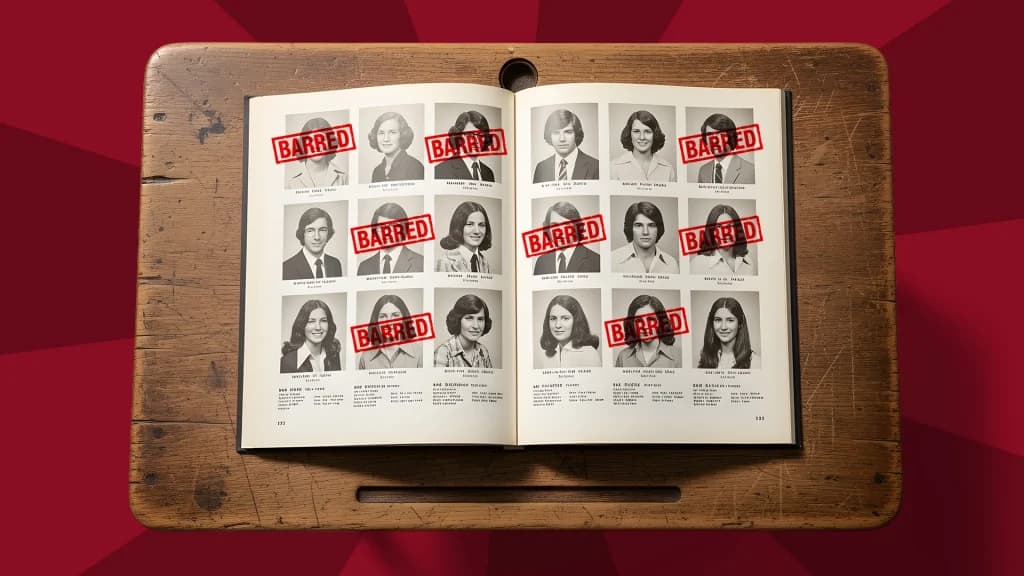
Some casinos even hired private detectives, and one figured out that too many skilled players had Boston addresses. He eventually got his hands on an MIT yearbook, which led to many core members being barred from most major casinos.
How True to Life Is the 21 Movie?
21 is based on a true story, but then again, so is Cocaine Bear. You don’t exactly make the best casino movies without a few “ooh” and “ah” moments to bend reality a bit. But we’ll clear those up for you now.
What The Movie Got Right
21 nailed the MIT blackjack team structure with spotters and big players. It also nailed the intensive training, the massive wins, the eventual fallout, and the very real pressure and paranoia that came with operating such a scheme.
What Hollywood Invented
The main character, Ben Campbell, isn’t a real person. The movie also compresses years of operations into a few months, making it seem as if they were caught much faster than they actually were.
The Laurence Fishburne character is dramatically more menacing than real casino security, which mostly just asks you to leave and maybe takes your photo for their records.
Finally, the movie makes it appear as if the MIT team won on every trip. The reality is that losses and brutal variance were part of the deal.
However, we can’t discount the man himself, Bill Kaplan, who praised the movie for accurately capturing the spirit of their operation.
With discipline, skills, and, apparently, a teacher who’s won an Oscar, players can dominate blackjack more than people realize. Well, at least in theory. But you don’t need a team of MIT students or a suitcase full of investor cash to appreciate that lesson. The game already comes with the lowest house edge at the casino. All you have to do to take advantage is play. Try blackjack at Cafe Casino, and you might be the main character of your own big winning story.