
Splitting 6s in Blackjack: A Decision at the Crossroads
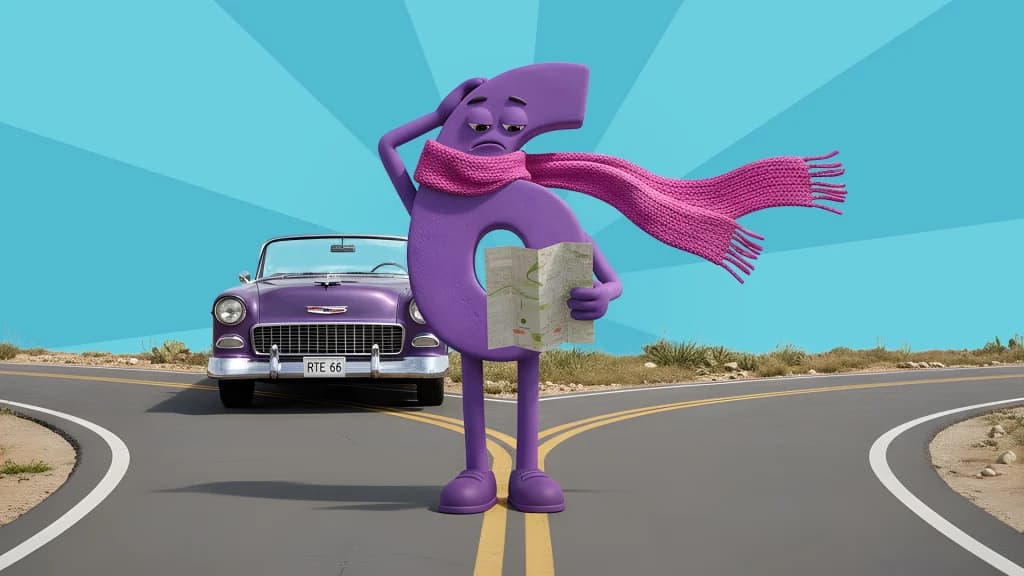
Getting dealt a pair of 6s in blackjack is like arriving at a crossroads. Appropriate, since we can say you’re on Route 66. A 12 is not a good hand. Two sixes aren’t great either. So, which is the best path to take: splitting or not splitting? For the most part, you’d split.
In our Route 66 analogy, splitting means taking the most-traveled path to the mega-cool Blue Whale of Catoosa. However, sometimes you’ll find yourself staying as-is and swerving down the road less traveled.
This guide will help you develop a sixth sense for which way to drive when faced with a pair of 6s.
If the dealer has weak cards (2–6)
- Split a gainst dealer’s 3-6
- If DAS, split against 2.
- If NDAS, hit against 2.
When the dealer shows a 2 through 6, they’re in trouble, and you experience a juicy sense of Schadenfreude.
These are the bust cards, which are upcards that force the dealer into an awkward total and likely send them spiraling over 21. This is a fabulous opportunity for your pair of 6s, like spotting another Buc-cees, and thus, another chance to buy a beaver onesie. Don’t let it slip this time.
Your 12 is still bad, sure, but the dealer’s weakness gives those two 6s somewhere to go. Split them, and you’re turning one losing hand into two hands with a fighting chance.
For instance, if you draw a 5 on either hand, you’ll then hold 11, which is one 10-card away from blackjack.
So, when do you split 6s in blackjack against weak cards? The general rule is to split against a dealer’s 3 through 6 across most game types, whether you’re playing single, double, or multi-deck blackjack. But, like whether cereal is considered soup, the debate gets spicy when a dealer’s 2 is involved.
In single or double-deck games, you split regardless of the rules. In multi-deck games that allow doubling after splitting (DAS), you also split. In multi-deck NDAS, or games where you cannot double after splitting, you hit. It feels wrong, like leaving Texas without seeing Cadillac Ranch, but you lose less money over time. It’s just not on the way.
If the Dealer Has 7 or Higher
- Do not split, except…
- DAS, single & double deck, against a dealer’s 7
Should you split 6s in blackjack when the dealer’s card is strong? Almost never.
Once the dealer flips a 7 or higher, the six appeal of splitting pretty much evaporates. A 7 puts the dealer on a likely 17, which stomps your 12 without breaking a sweat.
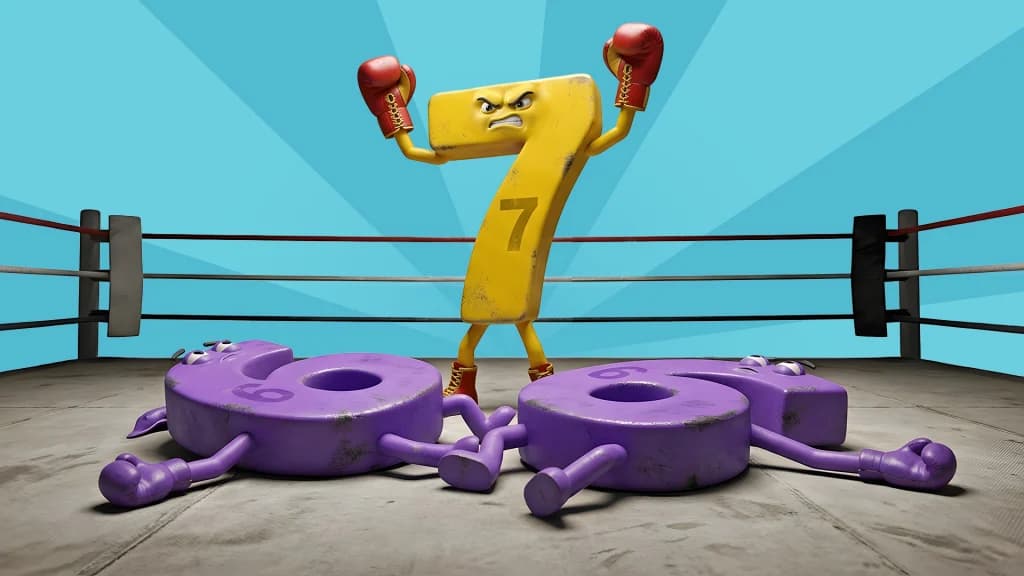
In this situation, splitting your 6s doesn’t give you two opportunities. It gives you two mid boxers who both lose the fight. And if you want to avoid that kind of situation, you’d better know when to split in general.
For most game types, when the dealer shows 7 through Ace, you hit your 12, knock on wood (Punchbug!), and hope it works.
The one exception (and it’s a genuinely good one) is single and double-deck games with DAS. In those games, you split your 6s against a dealer’s 7. Why? Because if you draw a 5 to one of those 6s and land on 11, DAS lets you double down right then and there.
That extra opportunity is just juicy enough to make splitting the better play. A wise man called Drake once said, “started from the bottom, now we’re here.” In blackjack, going from a 6 to an 11 double-down is exactly that energy. Roll down the windows, turn that song up, and take the opportunity.
Impact of Single- and Double-Deck Blackjack
Between single and double-deck games, the only difference comes down to how you manage the dealer’s 7:
- NDAS: Split against dealer 2–6, hit everything else
- DAS: Split against dealer 2–7, hit everything else
Fewer decks mean each card carries more weight. Less cardboard in the shoe means the odds of drawing something strong to your split 6 are slightly better.
In comparison to multi-deck games, that extra oomph is why single and double-deck games reward slightly more aggressive splitting overall, including against the dealer’s 7 when DAS is in play.
Multi-deck games dilute the impact of individual cards, which tightens the splitting range considerably. Against a dealer’s 2 with NDAS in a multi-deck game, basic blackjack strategy actually favors hitting over splitting.
Impact of DAS/NDAS Rules
If deck count is the subtle variable, DAS versus NDAS is the passenger who points out you took a wrong turn six miles ago. Now everything changes.
When you split a pair of 6s, you’re starting two new hands at 6. It’s underwhelming on paper. But draw a 5 to either hand, and you’re suddenly sitting on 11, which is one of the best doubling totals in blackjack. DAS lets you press that advantage like a video game power-up. NDAS takes the controller away.
That one rule shrinks your options in a real, measurable way. Follow these guidelines.
- Single/double-deck DAS: Split 2–7, hit everything else.
- Single/double-deck NDAS: Split 2–6, hit everything else.
- Multi-deck DAS: Split 2–6, hit everything else.
- Multi-deck NDAS: Split 3–6, hit everything else (including 2)
If You Can Resplit
Resplitting is one of those rules players forget to check, then kick themselves over mid-session. Always check the GPS before you drive, people!
The play here is simple. If the casino allows it, always resplit when another 6 is dealt to a split hand. Always.
Here’s the scenario.
You split your 6s against a dealer’s 5, entering a hopeful spot. On your first 6, the dealer drops another 6, and just like that, you’re staring at the same 12 you were trying to escape in the first place.
If resplitting is allowed, you split again. Now you’ve got three hands, each starting at 6, against a dealer staring down one of the weakest upcards in the game. If the casino allows four hands and a third 6 shows up, you split again.
Every additional hand is six-nifigant opportunity to draw well against a dealer who’s already in trouble. The odds support resplitting every time.
What numbers do you never split in blackjack?
- Never split 5s
- Never split 10s
Yes, some pairs should be broken apart faster than a boy band after their third album. For instance, you always split a pair of 8s. But sometimes, you never ever break up the band. Those could be the next One Direction, but hopefully the right direction this time.
The two you never split are 5s and 10s.
A pair of 5s gives you a total of 10, which is one of the best starting totals for doubling down in the game. Splitting them into two hands, each starting at 5, is like dismantling a perfectly loaded nacho platter. Nobody wins.
A pair of 10s gives you 20, which overwhelmingly wins the majority of the time. Splitting them is the kind of move that pit bosses suspect you of something fishy, like counting cards with Illustrious 18. Just don’t, unless you know that’s the game plan.
Knowing when to pull the trigger on a pair of 6s is what keeps you six-cessful or going six feet under (in blackjack terms, of course). Play them right, and collect your six-nificant wins. Put your strategy to work at Cafe Casino’s blackjack tables, and when the crossroads appear, pick the road that wins based on the dealer’s upcard. Oh yeah, and don’t forget the beef jerky.