Types of Blackjack, Every Variation Explained
Classic blackjack is just the beginning. Once you’ve learned the basics, you’ll discover that the 21 you know is one of a dozen versions being dealt across casino floors and online tables right now, some with wild twists, some with extra side bets, and a few with rule changes that flip the math entirely.
Spanish 21 throws out the tens. Blackjack Switch lets you swap cards between two hands. Double Exposure flips both dealer cards face up, then takes something back in return. This guide walks through every major variation so you know what you’re getting into before you sit down.
Blackjack Basics in 60 Seconds
The goal: beat the dealer by getting closer to 21 without going over. You start with two cards, the dealer starts with two cards, and you decide whether to hit (take another card) or stand (stay with what you have). Other options, doubling down, splitting pairs, surrendering, are available depending on the variation.
A natural (blackjack), an Ace plus any 10-value card on the opening deal, typically pays 3:2. Some tables pay 6:5, which is significantly worse for the player over time. Always check the payout before sitting down.
A push means both you and the dealer reach the same total, your bet is returned. A bust means you exceeded 21 and lost immediately.
How Many Types of Blackjack Are There?
There’s no firm answer. The main named variations number around a dozen, but side bets, deck-count changes, and house-rule tweaks create dozens of hybrids and regional variants. What follows are the versions you’ll actually encounter at most online casinos and live tables.
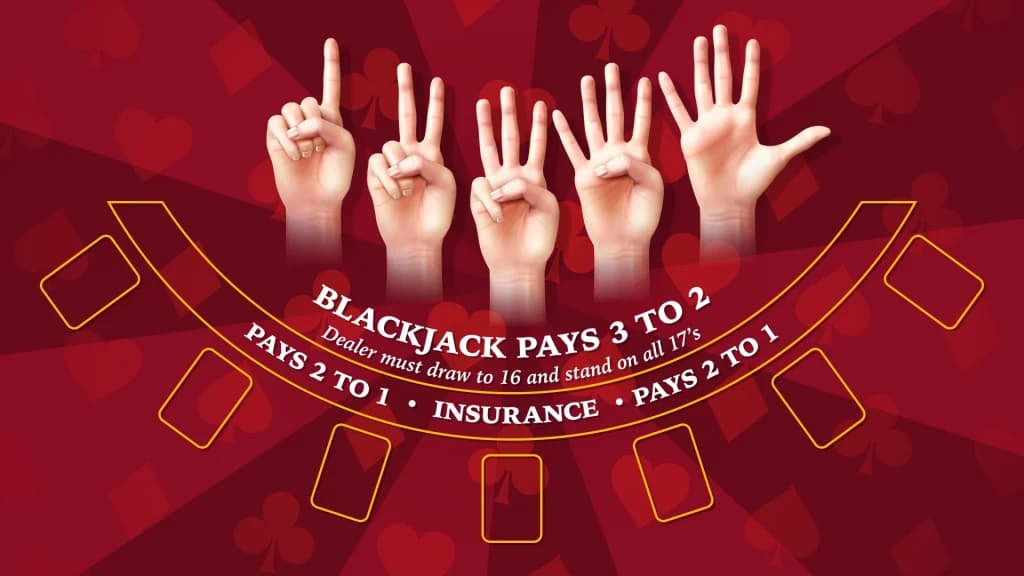
The Most Popular Blackjack Variations
Each variation gives the game a slightly different rhythm. Here’s what changes, what it means for you, and who it suits.
Classic / American Blackjack
The baseline. Four to eight decks, dealer peeks for blackjack, player can double down and split in most situations. House edge around 0.5% with basic strategy. If you’re learning, start here.
European Blackjack
Two decks, and the dealer doesn’t peek for blackjack before you play. That matters: if you double down or split and the dealer has a natural, you lose the extra wager as well as the original. The restriction costs you compared to the American version, so be more cautious with doubles against Ace.
Spanish 21
Played with a 48-card Spanish deck, all the tens are removed, leaving jacks, queens, and kings as the only 10-value cards. That single change swings the house edge up significantly. The game compensates with bonus payouts: a player 21 always beats a dealer 21, five-card 21s pay extra, and suited 6-7-8 and 7-7-7 combinations earn special bonuses. High variance, player-friendly rules once you learn the bonuses.
Pontoon
The British version of 21, with different names for everything. A pontoon is an Ace-plus-10-value natural (pays 2:1). A five-card trick is any five-card hand that doesn’t bust (also pays 2:1). The catch: the dealer’s cards stay face down until the end. You’re making decisions with no upcard information, which changes basic strategy considerably. Don’t play Pontoon the same way you’d play classic, the rules are different enough to require their own approach.
Blackjack Switch
You play two hands simultaneously and may swap the top cards between them before play begins, a huge player advantage. The catch: a dealer 22 pushes rather than busts, and a natural pays even money instead of 3:2. The swap opportunity is actually powerful, but those two rule changes give a lot of it back. Net house edge is still competitive with good strategy.
Super Fun 21
Single deck, player-friendly exceptions everywhere: you can double after splitting, late surrender on any number of cards, and a player diamond suited natural pays 2:1. But a natural only pays even money in all other cases (versus the standard 3:2). That even-money payout is expensive and brings the house edge up unless you hit the diamond blackjack frequently.
Perfect Pairs
Classic blackjack with an optional side bet. Before the main hand, you can bet on whether your first two cards will form a pair. Mixed pair (same rank, different color) pays around 6:1. Colored pair (same rank, same color) pays around 12:1. Perfect pair (same rank, same suit) pays around 25:1. The side bet carries a high house edge, typically 4–8%. Play the main game well first; add the side bet occasionally if the excitement appeals. See the blackjack side bets guide for the full breakdown.
Vegas Strip
Four decks, dealer stands on soft 17, late surrender available, and you can split up to four hands. Good player-friendly conditions, the Vegas Strip rules give a low house edge when combined with solid basic strategy. Doubles allowed on any first two cards.
Atlantic City
Eight decks, dealer stands on soft 17, late surrender available after the dealer checks for blackjack. Splitting up to three times allowed, and doubles permitted on any first two cards. One of the most player-friendly rule sets available, house edge around 0.35% with basic strategy. A solid choice for serious players.
Double Exposure
Both of the dealer’s cards are dealt face up. Total information before you play, no guessing. The catch: a natural only pays even money (not 3:2), pushes go to the dealer instead of refunding your bet, and some tables restrict doubling. Knowing both dealer cards is valuable; the offsets are real and bring the edge back toward typical levels.
Free Bet Blackjack
Doubles and splits on qualifying hands are free, the casino puts up the extra stake. Powerful advantage in theory. The catch: a dealer 22 is a push rather than a bust. That single rule change significantly offsets the free betting advantage. Still an enjoyable variation with plenty of action, especially for players who split and double frequently.
| Variation | Defining Rule Twist | House Edge vs. Classic | Best For | Any Catch? |
| Classic / American | Dealer peeks for blackjack | Baseline ~0.5% | All players; the standard reference | No |
| European | Dealer doesn’t peek; no hole card | Slightly higher | Rules-confident players | Double/split losses to dealer BJ |
| Spanish 21 | No tens in the deck; bonus payouts | Higher without bonuses | Bonus hunters, high-variance players | Missing tens hurts base math |
| Pontoon | Both dealer cards face down; 2:1 naturals | Similar to classic | UK-style variant fans | Blind play changes strategy significantly |
| Blackjack Switch | Swap top cards between two hands | Competitive | Players who like decisions | Dealer 22 pushes; BJ pays even money |
| Super Fun 21 | Single deck; player exceptions | Higher | Casual fun players | BJ pays even money (not 3:2) |
| Perfect Pairs | Optional pair side bet | Varies (side bet ~4–8%) | Side bet enthusiasts | Side bet house edge is high |
| Vegas Strip | 4 decks; soft 17 stand | Low ~0.4% | Strong basic strategy players | No major catch |
| Atlantic City | 8 decks; late surrender; soft 17 stand | Very low ~0.35% | Serious edge-minimizers | No major catch |
| Double Exposure | Both dealer cards face up | Similar once offsets applied | Players who want full information | Pushes go to dealer; BJ pays even money |
| Free Bet | Free doubles and splits on qualifying hands | Competitive | Players who split/double frequently | Dealer 22 pushes instead of busting |
Several of these variations are also available with a live dealer, real cards, a real human dealer, and the full table atmosphere on your screen.
Which Blackjack Variation Has the Lowest House Edge?
Atlantic City blackjack sits at roughly 0.35% with basic strategy, one of the lowest available at any table game in the casino. Vegas Strip is close behind at around 0.4%. Classic American rules with a single deck and favorable dealer-soft-17 rules can get close to or below 0.5%.
The biggest factors driving house edge: deck count (fewer decks generally better), whether the dealer hits or stands on soft 17 (stand is better for the player), and whether a natural pays 3:2 or 6:5 (3:2 is better). For the detail on those last two variables, see the guides on single vs double deck blackjack and H17 vs S17.
Tips for Trying New Blackjack Variations
Trying a new variation is one of the more entertaining ways to refresh your blackjack sessions. A few things to get right before you start:
- Read the table rules before placing a bet. Each variation changes at least one core rule, sometimes several. What was the right move in classic blackjack might not be right here.
- Use Practice or demo mode to learn the variation before wagering. Pontoon, Spanish 21, and Blackjack Switch all require meaningfully different strategy than classic play. Playing for free first costs nothing and can save you from expensive early mistakes.
- Set a bankroll before you play. Decide what you’re comfortable spending on the session and stick to it. The National Problem Gambling Helpline is available at 1-800-522-4700 and ncpgambling.org.
- Practice blackjack for free is the best way to build confidence in a new variation before the real thing.
Which Type of Blackjack Is Best for You?
Lowest house edge: Atlantic City or Vegas Strip. Classic basic strategy, player-friendly rules, and no gimmicks.
Best bonus and variation action: Spanish 21 or Blackjack Switch. More decisions, more potential payouts, more things happening on screen.
Best for new players: Classic / American. Learn the baseline, then branch out once the fundamentals are automatic.
Ready to find yours? Browse the blackjack games at Cafe Casino and pick one.
FAQs
What is the most popular type of blackjack?
Classic American blackjack is the most widely played version. It’s the baseline that most players learn on, and its straightforward rules, dealer peeks for blackjack, 3:2 natural payout, standard doubling and splitting, make it the natural starting point.
Which blackjack variation has the best odds for players?
Atlantic City blackjack offers one of the lowest house edges at around 0.35% with basic strategy. Vegas Strip is comparable. Both feature late surrender, dealer stands on soft 17, and multiple splitting opportunities, all player-friendly rules.
What’s the difference between American and European blackjack?
The main difference is the hole card. In American blackjack, the dealer peeks at their hole card before play begins, if they have a natural, it’s over immediately and you don’t lose any split or double wagers beyond the original bet. In European blackjack, the dealer takes their second card after all players have finished, so a double or split against a dealer natural costs you both wagers.
Can I play blackjack variations online for free?
Yes. Practice Mode lets you try any variation, including Pontoon, Spanish 21, and Blackjack Switch, with demo chips and no real money at stake. It’s the smartest way to learn a new variation’s rule differences before wagering.
Are blackjack side bets like Perfect Pairs worth it?
As pure entertainment, yes. As a strategic choice, not really. Side bets like Perfect Pairs carry house edges of 4–8%, far higher than the main game. Occasional fun is fine; building a session around side bets works against you mathematically.
How many types of blackjack are there?
There are around a dozen widely recognized named variations, with more created by adding side bets or adjusting specific house rules. The core variations, American, European, Spanish 21, Pontoon, and the rest covered in this guide, are the ones you’ll encounter across most online and live casinos.
Disclaimer: The information provided in our casino blog posts is for educational and entertainment purposes only. While we discuss popular casino strategies and offer tips for various games, please note that no strategy can guarantee a win. Casino games are based on chance, and outcomes are unpredictable. We encourage all players to gamble responsibly and never bet more than they can afford to lose.
More Blackjack Strategies
January 19, 2026
Do you split 4s in blackjack? The Four-mula 4 Success
You pretty much always split 4s in blackjack, except for a few key circumstances. Learn what to do with a pair of fours based on the upcard, decks, and rules.
December 5, 2025
Hit or Split: Do You Split Twos In Blackjack?
Two 2s is a low total, so most players hit. However, there are some situations where you should split. Learn when to hit and when to split two 2s.
February 24, 2025
When to Split in Blackjack & Blackjack Strategy Card
Splitting pairs can increase your wins in blackjack – or your losses. Learn when to confidently split in blackjack and when to leave your hand as-is.
July 30, 2026
What Is Insurance in Blackjack?
Blackjack insurance pays 2:1 but carries a 7.5% house edge. Learn how it works, when to take it, and why basic strategy says skip it.