Roulette Payouts: What Every Bet Pays When the Wheel Stops

- Roulette payout chart
- What 35-to-1 pays out
- What inside bets pay out
- What outside bets pay out
- American, European and French Roulette wheels compared
- Why payouts don’t match true odds
- Roulette house edge
- Roulette payouts FAQs
The ball spins round and round, rattling amid clinking glasses and slot machine jingles, until it lands in a pocket with a satisfying kerplunk. But that pocket isn’t just where the ball stopped. If you bet on it, it determines your payout.
Every spot on the roulette table pays a different amount, depending on how you bet. Luckily, roulette payouts are quick and easy to learn. Even better, they’re identical across all types of roulette wheels.
Below, you’ll find a complete explanation of roulette odds and payouts, including a payout chart, dollar examples for common stakes, and a look at how each wheel type changes your odds of winning.
The Complete Roulette Payout Chart
If you want to make like a roulette ball and skitter straight to the numbers, the roulette payouts chart below is the quickest way to view roulette odds and payouts.
For those who want more detail, what are roulette payouts?
Roulette payouts are represented as a ratio, like 5:1, which you’d say aloud as “five to one.” Multiply your bet by the first number, and that’s your payout.
Say you bet $5 and your payout is 5:1. The payout formula is: 5 x 5 = $25.
Look at you, a human roulette payout calculator!
| Payout | American win chance | European win chance | |
| Straight up (1 number) | 35:1 | 2.6% | 2.7% |
| Split (2 numbers) | 17:1 | 5.3% | 5.4% |
| Street (3 numbers) | 11:1 | 7.9% | 8.1% |
| Corner (4 numbers) | 8:1 | 10.5% | 10.8% |
| Top line (5 numbers)** | 6:1 | 13.2% | 13.5% |
| Double street (6 numbers) | 5:1 | 15.8% | 16.2% |
| Column (12 numbers) | 2:1 | 31.6% | 32.4% |
| Dozen (12 numbers) | 2:1 | 31.6% | 32.4% |
| Red or Black | 1:1 | 47.4% | 48.6% |
| Odd or Even | 1:1 | 47.4% | 48.6% |
| High or Low | 1:1 | 47.4% | 48.6% |
**The top line, or five-number bet covering 0, 00, 1, 2, and 3, only exists in American roulette.
What a 35-to-1 Payout Actually Pays You

Let’s put some dollars behind that 35-to-1. If you wager $10 on a single number and it hits, you win $350 in profit ($10 bet X 35 payout = $350).
However, the dealer won’t just hand you $350. They will also hand you back your original $10 bet, making your final return $360.
This is where many players get confused and miscount their return, believing that the final number is their total profit. Don’t forget to mentally subtract your original bet.
The table below shows both your profit and your final return for a handful of common stake sizes and a 35:1 payout.
To calculate your roulette payout yourself, including the final return, multiply your stake by the first number in the payout ratio, then add your original stake back in for the total return.
| Straight up (35 to 1) Profit / Total Return | Split (17 to 1) Profit / Total Return | Red or Black (1 to 1) Profit / Total Return | |
| $5 stake | $175 profit / $180 total | $85 profit / $90 total | $5 profit / $10 total |
| $10 stake | $350 / $360 | $170 / $180 | $10 / $20 |
| $25 stake | $875 / $900 | $425 / $450 | $25 / $50 |
| $100 stake | $3,500 / $3,600 | $1,700 / $1,800 | $100 / $200 |
Inside Bets: Bigger Payouts, Longer Odds
There’s no rush like the rush of landing on your single number in roulette. It’s rare, and your payout reflects that: 35:1, the highest in roulette. That’s the idea behind inside bets.
Inside bets are lower-coverage bets that are located within the main betting table. They pay the most in roulette because they’re the hardest to hit.
Coincidentally, that’s also the idea behind cookies. A cookie that tastes a bit too good is bound to be abundant in calories. We didn’t say that would stop us, but…noted.
Below are all of the inside bets, where to find them on the layout, and what they pay.
- Straight-up: Pick one number and place your chip directly inside its box. If it lands, you collect 35-to-1.
- Split: Cover two neighboring numbers by setting your chip on the line between their boxes. A winning split pays 1- to-1.
- Street: A roulette street bet covers three numbers in one horizontal row and pays 11-to-1. Place your chip on the outside edge at the end of that row.
- Corner: Four numbers that form a box. Put your chip where all four boxes meet. The payout is 8-to-1.
- Top line: Only available on American roulette. It covers 0, 00, 1, 2, and 3 and pays 6-to-1. Place the chip along the edge where the green pockets meet the first row of numbers.
- Double street: Cover two neighboring rows (six numbers total) by placing your chip between them, where the dividing line meets the outside line. A win pays 5-to-1.
Outside Bets: Smaller Payouts, Steadier Wins

If you appreciate the heart-jump feeling of winning often, you might prefer outside bets, as they have the highest odds of winning. But the trade-off is lower payouts. In roulette, the easier a bet is to win, the less it pays. It’s like Disney World parking. The easiest spot is always five countries away from the entrance.
Below are the outside bets in roulette.
- Column: Vertical columns of 12 numbers (there are three columns). Place your chips on the line at the end of the column. A winning column bet pays 2-to-1.
- Dozen: There are three dozens. Put your chips on the rectangle below the designated boxes. Your choices are 1–12, 13–24, or 25–36. Each dozen covers 12 numbers and pays 2-to-1.
- Red or black: Pick one of the wheel’s two colors. Red or black in roulette each covers 18 numbers at once and pays 1-to-1.
- Odd or even: Back all 18 odd numbers or all 18 even numbers for a 1-to-1 payout. Put your chips in the box that says “odd” or “even.”
- High or low: Choose the boxes labeled 1–18 (low) or 19–36 (high), again covering 18 numbers for 1-to-1.
So how about that green pocket/s, sitting lonely in the grass, a zero or zeros blowing in the wind at the end of the layout?
The green pocket is the 0 on European and French wheels, and 0 + 00 on American wheels. This bet is separate from all outside bets. If the ball lands on green, all other outside bets lose, including column, dozen, red/black, odd/even, and high/low.
Many budget players who are watching their chips prefer outside bets. They cover more numbers and, yes, return smaller amounts. But winning more often stretches your bankroll much further, so you can stick around for more trips around the wheel.
American, European, and French Payouts Compared
The types of roulette wheels sound like a United Nations meeting at the casino. But the differences between them are not nearly as substantial as factory-sliced yellow cheese and fresh Gruyère. It really just comes down to the zeros.
In the most common comparison of European vs. American roulette, European has one zero pocket, while American has two. French roulette also uses the European wheel with just one zero.
Because American roulette has an extra zero pocket, each bet has slightly lower odds of winning. But the good news is that the payouts across all three roulette types are identical, despite the difference in house edge. American roulette payouts aren’t smaller than European roulette payouts just because the house edge is higher.
French roulette sneaks in one extra perk. With La Partage, if the ball lands on zero and you have an even-money bet down, you get half your stake back instead of losing the whole bet.
| American | European | French | |
| Pockets on the wheel | 38 | 37 | 37 |
| Straight-up payout | 35:1 | 35:1 | 35:1 |
| Even-money payout | 1:1 | 1:1 | 1:1 |
| House edge | 5.26% | 2.70% | 2.70%; 1.35% on even-money bets with La Partage |
| Zero rule on even-money bets | None | None | La Partage: half your stake is returned when 0 lands |
| Best for | Short, fun sessions without taking your returns too seriously | Players who want to save on longer sessions with better odds | Strategies centered on even-money bets |
There’s one type of roulette that we didn’t add to the chart, perhaps because it’s pure evil: Triple Zero roulette. With yet another zero, the odds of winning each bet tank, since there’s yet another pocket that can make your bet lose. If Triple Zero were at the roulette United Nations meeting, it would represent the Death Star.
If you want the lowest house edge and the highest odds of winning each bet, always play European roulette.
Why Payouts Don’t Match the True Odds
See if you notice something odd here:
A roulette straight-up bet covers one number out of 38 on the American roulette wheel. That means there’s one winning outcome and 37 losing outcomes, giving you true odds of 37:1. And yet, the payout is only 35:1. What’s the deal?
The gap you see between a bet’s true odds and its payout odds creates the house edge. On outside bets, you can see the same mathematical advantage in the green zero.
Even though the odds of green in roulette are the same as any other straight-up number, the green pocket(s) break up outside bets that would otherwise be exactly 50-50, such as red or black, odd or even, and high or low. When green lands, it’s a win for the house.
Roulette House Edge
On American roulette, the house edge is 5.26%. European roulette brings it down to 2.70%, thanks to the single zero, and French roulette has the same standard edge. When La Partage applies to an even-money bet, the French roulette house edge on that bet falls to 1.35%.
What does that mean for your bankroll over a long session?
Over a very large number of wagers, a 5.26% house edge represents an average theoretical loss of $5.26 for every $100 wagered. A 2.70% edge represents $2.70.
While these figures describe what would happen over time, there’s no way to predict how your individual sessions will turn out. Results can land anywhere in the short term, and no betting pattern changes the math underneath them.
The most important roulette strategy is never to bet money you can’t afford to lose. Set a budget and deposit limits and stick to them. If gambling ever stops feeling fun, find confidential support through the National Problem Gambling Helpline at 1-800-522-4700 or ncpgambling.org.
Pick Your Bet and Pull Up a Chair

By now, the payout charts in this guide should make choosing your decisions at the roulette table pretty simple.
The more likely a bet is to win, the lower its payout will be. If you want a larger payout, you must accept a lower chance to win, and that’s the whole point of the game!
If you’re itching to get out there and play roulette games online, you can experience the trade-off on the wheel from wherever you are right now. Pick the bet size and coverage that suit your bankroll, grab a snack, then let the ball handle the rest. That satisfying kerplunk is just a spin away.
FAQs
What does a 35 to 1 payout mean in roulette?
If you bet $10 and win a 35:1 payout, your profit would be $350. The dealer would also return your original $10 bet, so they would hand you $360 ($350 win + your $10 bet).
How much do you win if you put $100 on red in roulette?
Red is an even-money bet that pays 1:1. If you put $100 on red and win, you will profit $100. The dealer would also return your $100 bet, so they would hand you $200 total.
What do 1st 12, 2nd 12, and 3rd 12 mean on the roulette table?
Those numbers cover the three dozens, which divide all roulette numbers, except for the zero/s, into three equal groups. The 1st dozen contains numbers 1 through 12. The second dozen includes numbers 13 through 24, and the third includes numbers 25 through 36. Each dozen pays 2:1.
Does betting on green pay more than any other number?
No. Betting on green pays 35:1, the same as any other single number. The green pocket exists to prevent even-money bets from being 50/50, which creates the house edge.
What is the riskiest bet in roulette?
The straight-up bet, a bet on a single number, is the riskiest in roulette. You have a 2.7% chance of winning it on either European or French roulette, and a 2.6% chance on American roulette. It pays 35:1 on all roulette types.
Do American and European roulette pay out differently?
No. The payouts are the same; only the odds of winning and the house edge differ.
Why is 17 such a popular number in roulette?
Number 17 sits almost dead center on the betting layout, so it naturally catches the eye. It also picked up some casino folklore from Sean Connery, who famously won on 17 three times in succession and later bet on 17 as James Bond in Diamonds Are Forever. Despite the reputation, 17 pays exactly the same 35-to-1 as every other single number.
More Roulette Tips
August 4, 2026
Roulette Strategy: Smarter Ways to Play the Wheel
Following a roulette betting strategy could help you stay in the game and win more. These are the top 10 roulette betting strategies and how they work.
July 28, 2026
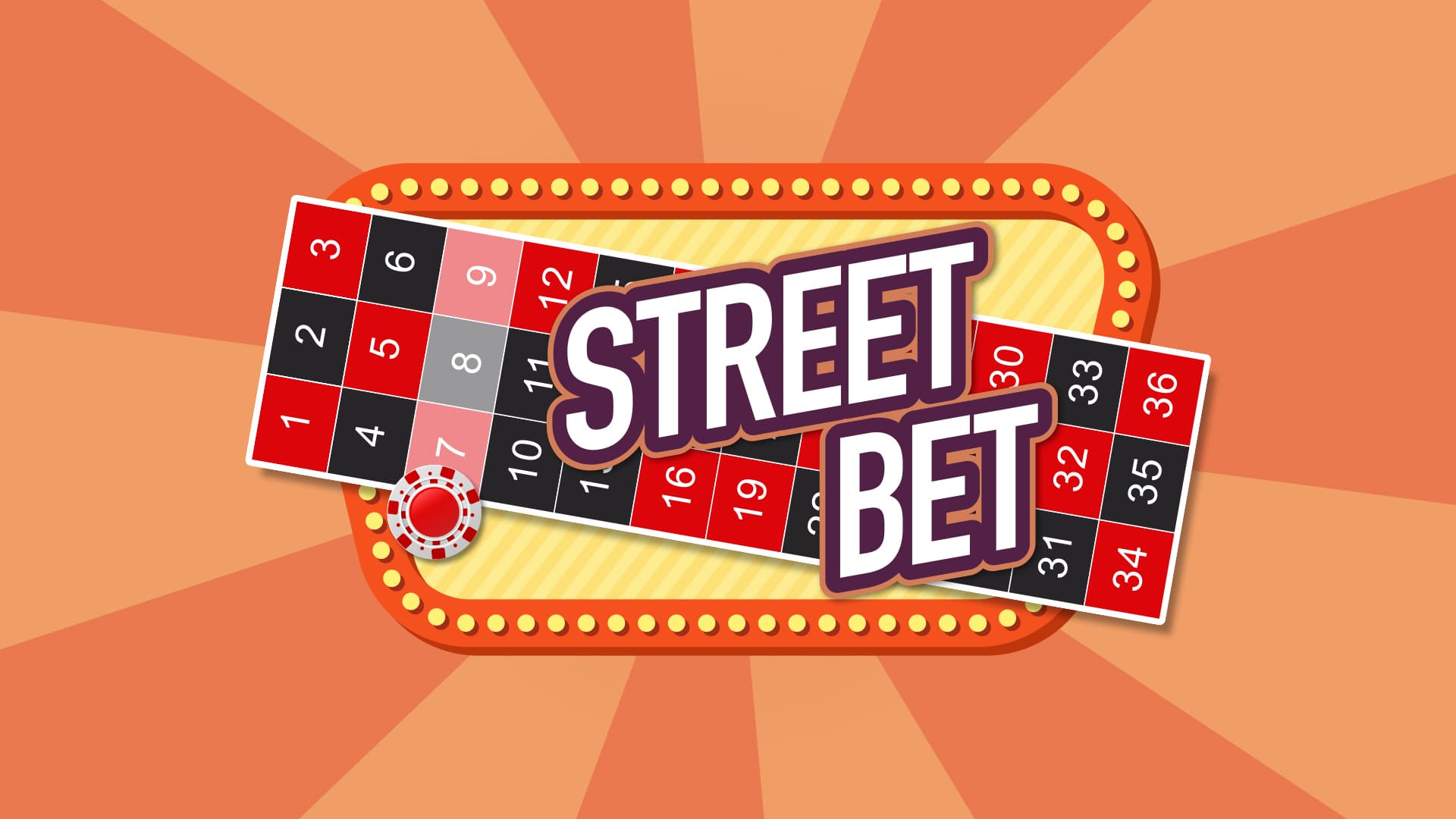
What Is a Street Bet in Roulette?
A roulette street bet is a wager on three numbers in a row for an 11:1 payout. Learn how it works and when you should use it, if ever at all.
May 28, 2026
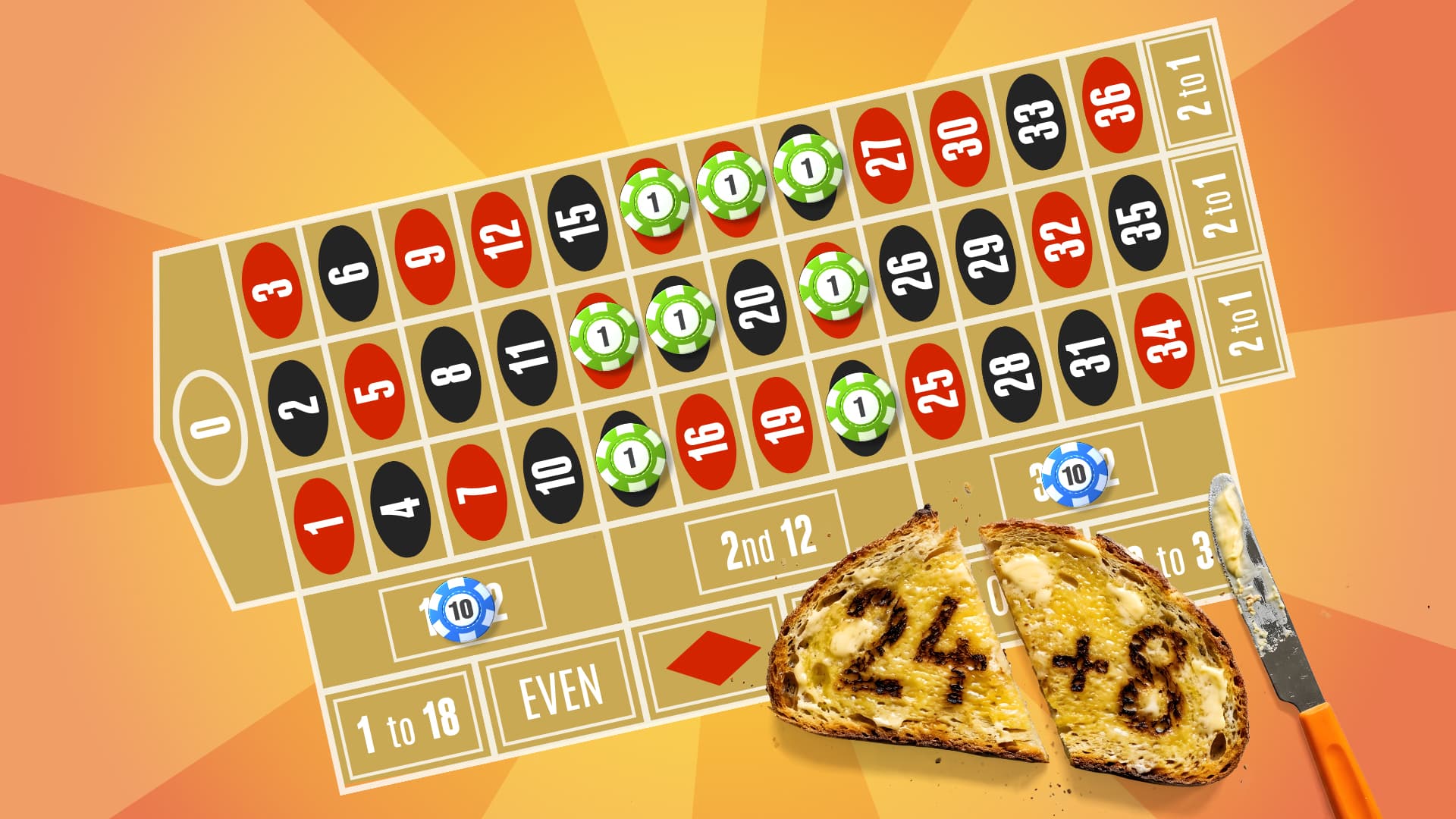
24+8 Roulette System: Spread the Wheel Like Butter
See how you can win most of the time when you spread your bets in the roulette 24+8 strategy. However, there are downsides to consider, too.

July 15, 2026
Best Online Roulette Sites: What to Look For and Where to Play
Learn what to look for when choosing an online casino to play roulette. Get a free checklist and specific details to verify to ensure you choose a winner.