
Blackjack Tournament Strategy: Play the Table, Not the Dealer

Usually, when you play blackjack, it’s you against the dealer, mano a mano, one-on-one. But when you play in a blackjack tournament, you play against the other players. Your goal is to finish a round with the most chips. Aside from that, the cards are dealt the same way and the same blackjack rules apply.
We’ll help you out with your blackjack tournament strategy, covering tournament formats and rules, how to size your bets, the importance of your betting position, and what to do when faced with your final hand.
- How blackjack tournaments work
- Tournament formats
- Tournament rules
- Bet sizing
- Why betting position matters
- How to play your final hand
- When to deviate from basic strategy
- Mistakes that lead to an early exit
- Key takeaways
- FAQs
How a Blackjack Tournament Works
When you join a blackjack tournament, it’s different from when you play blackjack games online. So how does a blackjack tournament work?
You pay an entry fee and join a table of 6 or 7 other players. Your table is among multiple others. You each start with the same stack of chips. These chips aren’t redeemable for cash as they would be in a normal game; they’re just there to keep points. The only cash you risk is the entry fee.
Each round consists of 15 to 30 hands, depending on the tournament. The player with the most chips at each table advances to the next round with a fresh stack equal to their opponents’.
And remember: Each hand is measured against the other players’ chip stacks, not how you fared with the dealer.
The field keeps narrowing this way until the remaining players reach the final table.
Tournament Formats and What Each One Demands
Above, we mentioned that multiple tables compete in a blackjack tournament. That’s the standard arrangement. However, there are multiple other formats, which will be vital to your strategy, as they each have different blackjack tournament rules.
Sit-and-Go
A sit-and-go blackjack tournament doesn’t start until the required number of players sign up, and there’s only one table. With only one table to beat, every chip is crucial, but there’s no need to make huge bets early on.
Multi-Round
In a multi-round tournament, qualifying players advance through a series of tables until only the finalists remain. Because advancing is the immediate goal, focus on maintaining enough chips to advance to the next round, not on building the biggest stack from the get-go.
Elimination
Elimination tournaments remove players with the lowest chip stacks after designated elimination hands. That’s on top of standard elimination when you lose all of your chips. There’s regular pressure to stay clear of last place, so it’s wise not to wait too long to increase your bet if you have a low chip stack.
Accumulation
In accumulation tournaments, you build as many chips as possible over a set period or series of sessions. Your total chip count determines your standing, so make larger bets earlier on to climb the rankings.
The blackjack tournament strategy chart below breaks down each tournament type.
| Sit-and-Go | Multi-Round | Elimination | Accumulation | |
| How it runs | One table begins when all seats are filled | Qualifiers progress through successive rounds | Lowest-chip players are removed at preset elimination hands | Build a chip total over a set period |
| How you advance | Win with the largest chip stack at the final hand | Finish high enough at your table to reach the next round | Avoid having the lowest qualifying stack at elimination hands | No eliminations; build as many chips as you can until the last hand |
| Typical length | One table session, fewer rounds | Several rounds, over a longer event | Multiple rounds with eliminations throughout | Varies |
| Where the pressure sits | The closing hands | Qualifying at each stage | Every elimination hand | Building enough chips to rank highly |
| Best for | A quick, contained tournament | Several chances to advance | The thrill of constant stack pressure | Aggressively building a higher total |
Tournament Rules That Differ From Cash Blackjack
Blackjack is still blackjack, even in a tournament. The rules of the actual game are exactly the same as cash blackjack. What changes is the betting structure and a few tournament-only rules. Below are features you’ll only find in tournament-style blackjack.
- Dealer button: A small marker the dealer moves from seat to seat at the table to establish the betting order.
- Fixed betting order: Players place bets in a specific order rather than all at once.
- Bet limits: You have to bet within a minimum and maximum limit.
- Timed bets: You normally have a limited amount of time to place each wager. In some tournaments, you could be eliminated if you wait too long.
- Re-buys: In some events, you can pay another entry fee to re-enter the tournament after you’re eliminated. This is usually only available within a certain window.
- Splits, doubles, and payouts: These rules are more flexible than at a standard cash table, but they vary by tournament. Always read the rule sheet first.
- Final-hand chip counts: On the last hand, you can ask the dealer to announce the chip totals so everyone knows exactly what they need to beat.
Bet Sizing Through the Round
Everyone at a blackjack tournament is a wiz at optimal strategy. So where does the competition come from? Your bet size. Sizing your bets relative to your position is the key skill to win a blackjack tournament. Your blackjack bankroll management looks much, much different.
Early Hands
Start small while the field is still large. Your goal is to preserve your stack and see how aggressively other players are betting before you commit more chips.
Middle Stretch
Now compare your stack with the leader’s. If you’re close, keep betting conservatively until you reach a point where you can overtake them. If the gap grows, increase your bet enough to make up meaningful ground.
If you’re the leader, match the bet of the player closest behind you. Similar bets preserve the gap between your stacks.
Closing Hands
Now you can go full throttle. If you’re behind, one or two substantial wagers can skyrocket your chips. Try to stay within one maximum bet of the leader, so that a single winning hand could nudge you over the winning edge.
Why Betting Position Matters
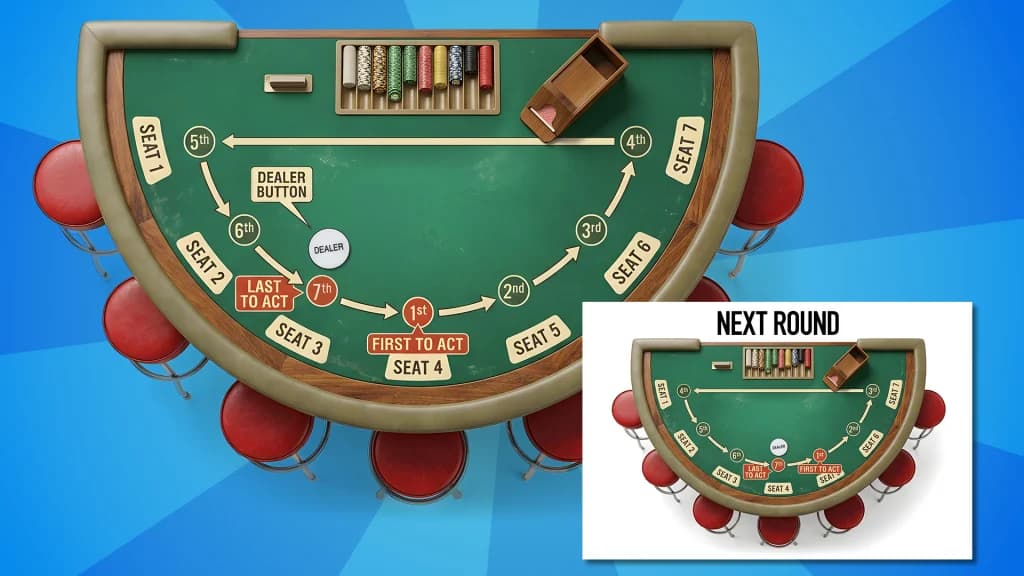
In tournament blackjack, a small dealer “button,” or marker, moves one seat around the table after each deal. That means your betting position changes constantly.
The player after the button bets first. They are at a disadvantage because they’re the first to make a move. The player in the last position gets to see every other player’s bets, so they have a distinct advantage.
Knowing that, you can adjust your strategy based on your position.
For instance, if you know you’ll have to bet first on one of the final hands, you may need to build a larger chip cushion earlier instead of waiting until the end to protect your lead.
Here’s a pro tip for you.
You can plan ahead by working out your final hand position. Look at where the button is now. Count forward one seat per hand. That tells you who will act first and who will act last when the round ends. If a player busts out before then, count again without that player’s hand.
The Final Hand Playbook
The final hand is crucial as it decides who advances. Your blackjack tournament betting strategy should be based on the chip counts, not necessarily on the most optimal move. Before you wager, work out exactly what you need to finish ahead.
Holding the Lead
If you’re ahead, generally speaking, you’ll want to bet big to widen the gap as much as possible. However, if the chaser bets bigger than you, match their bet. That way, if both hands win, you win the table because you’re already ahead, and if both hands lose, you still win the table because you preserved your chip stack. That’s why it’s more important to bet based on your rival’s hand, not the dealer’s upcard.
The exception is that if you bet in the first position and you have only one rival, bet small to preserve your chip stack. The chaser will bet big, but they have to actually win their hand to surpass you.
Chasing the Leader
If you’re behind, calculate the bet that would put you ahead of the leader if you win it. Sometimes a normal win is not enough, so hitting or doubling down may be your only route to the chip total you need, even though it’s not technically the optimal move.
Holding a Chip Back
Most players go all in on the final hand for that final push. The thing is, it can backfire if the dealer beats everyone. Keep one chip out of the wager so you still have something when your opponents lose their entire stack.
When to Leave Basic Strategy Behind

The goal of a tournament is different than standard blackjack, so you’ll make some seemingly “bad” decisions that would appall a regular blackjack player. But you do it to fit the context, because that’s how to play a blackjack tournament. It’s a different thing.
Blackjack basic strategy still tells you the default hit, stand, split, double, and surrender decisions. But when you’re trying to either quickly gain or preserve your chips, you’ll make different decisions to quickly meet that goal.
- Double to reach a target: If winning in a standard fashion would still leave you behind, you might double a strong hand on the chance it’ll catch you up.
- Take insurance to protect a lead: Insurance is usually a no-no, preached on blackjack mountaintops as a grave sin. But in tournaments, it can make sense if protecting part of your stack helps preserve a narrow lead against a rival.
- Surrender to save chips: If losing a full bet would drop you below an opponent, surrender can preserve enough of your stack to keep you in contention.
Pay attention to the chip count, not the card total alone. That’s what determines whether you should deviate from regular strategy.
Mistakes That End Tournaments Early
We’ve all done something we shouldn’t have done, texting exes and buying a 17th houseplant. At the very least, follow the tips below to avoid common mistakes in your next blackjack tournament.
- Betting the maximum on the opening hand: While it’s tempting to secure a massive stack right away, you’ll more than likely lose most of your stack before you’ve learned anything about the table. Start smaller and give yourself room to adjust.
- Ignoring the betting order: Acting first gives you less information, so you’ll want to be aware of when you’ll have the disadvantage. Keep track of the dealer button.
- Watching only the dealer: Your real competition is the other chip stacks, not the dealer. Keep an eye on who’s leading, who’s chasing, and how much they’re wagering.
- Entering without reading the format: Sit-and-Go, elimination, multi-round, and accumulation events reward different approaches. Know how players advance before the first hand.
Treat the entry fee as money you’re comfortable losing before you sit down. If gambling stops feeling fun or starts affecting your finances, the National Council on Problem Gambling offers anonymous support and resources.
Ready for Your First Tournament?
In review: What is a blackjack tournament? It’s a competition between you and the other players in the tournament to see who gathers the most chips.
For your first tournament, focus on three basics: know the format, track the chip stacks, and save the bigger bets for the hands that require them.
If you want to get comfortable with the decisions first, you play live blackjack online and practice tracking bets, position, and chip movement at a regular table.
Key Takeaways
- The goal of each round is to finish with enough chips to advance, not simply to beat the dealer.
- Your tournament chips keep score; the entry fee is the only money you actually risk.
- Sit-and-Go, multi-round, elimination, and accumulation formats all reward different approaches.
- Tournament rules can add betting order, wager limits, time limits, re-buys, and special final-hand procedures.
- Your bet size should change based on the gap between your stack and the players around you.
- On the final hand, chip totals matter more than following standard strategy automatically.
- Basic strategy still governs most hand decisions, but tournament situations can justify a deviation.
- Betting position is important because acting later gives you more information before you commit chips.
FAQs
How does a blackjack tournament work?
Every player starts with the same number of tournament chips and plays a fixed number of hands. Players with the largest chip stack advance.
Are blackjack tournament rules different from normal blackjack?
Yes, but only because they add features such as rotating betting order, fixed minimum and maximum wagers, timed decisions, elimination points, and sometimes re-buys. Aside from that, the usual blackjack rules apply.
Is there a blackjack tournament strategy chart?
A standard blackjack strategy chart tells you when to hit, stand, split, double, or surrender, which are all moves you’d make in a tournament. What it cannot tell you is how much to wager; that’s your decision only.
How much should I bet on the last hand?
Your wager depends on where you stand against the players closest to you. If you lead, protect enough chips to survive a rival’s successful bet. If you are behind, wager enough to move past the target stack if your hand wins.
Do I still need basic strategy in a tournament?
Yes. Basic strategy is still the starting point for your hand decisions. However, tournament circumstances can occasionally take priority. You might double to reach a required chip total, surrender to preserve your position, or use insurance when protecting a narrow lead.
Can I play blackjack tournaments online?
Yes. Online blackjack tournaments follow the same core structure, with equal starting stacks, limited hands, and rankings based on chip totals. The software handles betting order and progression automatically. Practice with regular online blackjack to refine your skills before joining a real competition.
More Blackjack Guides

November 5, 2026
What Is DAS in Blackjack? Double After Split, Explained
What Is DAS in Blackjack? Double After Split, Explained What is DAS in blackjack? DAS stands for “Double After Split.” You’ll encounter this rule on an online blackjack paytable or rules placard if you’re playing in person. You’ll also see it factored into strategy charts, which is a key focus of this DAS guide. We’ll […]
November 5, 2026
Blackjack Odds Explained: What Your Real Chances Are at the Table
You have a 42.4% chance of winning, a 49.1% chance of losing, and an 8.5% chance of pushing. See blackjack probabilities, charts, and stats.

July 23, 2026
Dana White’s Blackjack Strategy: What the UFC Boss Really Does at the Table
Does Dana White have a secret blackjack strategy, or is it something else? We answer that question here, and what you can learn from how White plays blackjack.

July 15, 2026
212 Blackjack Strategy: How the Manhattan System Works
The 212 blackjack strategy increases your bets after wins, in the pattern of 2-1-2, and so on. Learn how to use it, how it compares, and if it helps you win.